
The Alexander Technique
Address the cause of your pain, not just the symptoms
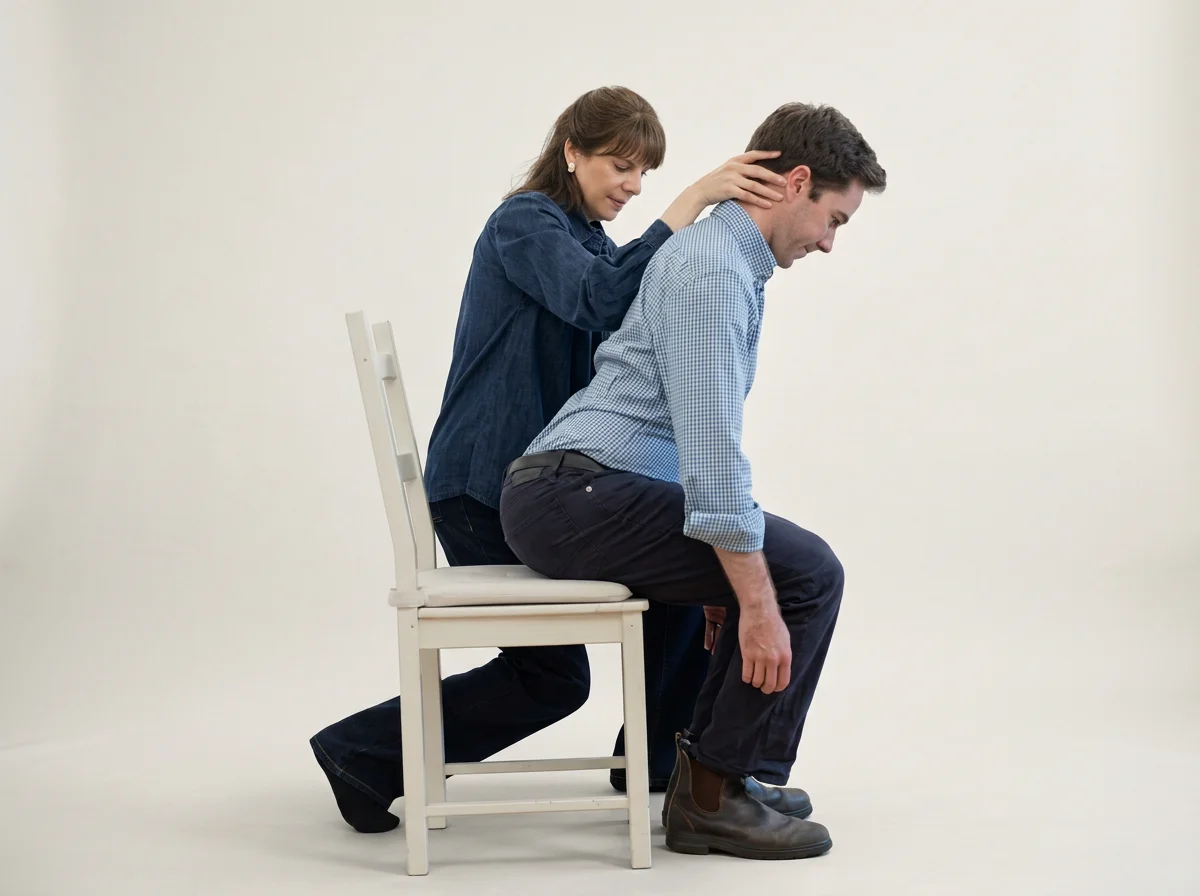
The Alexander Technique targets the harmful postural habits that drive pain and tension, so you can find lasting relief rather than short-term fixes.
How it works
Our everyday postural habits can create constant, excessive muscle tension
We each have an in-built system of deep postural muscles which are designed to keep us upright against gravity without getting stiff, sore or tired.
However, we often prevent those muscles from engaging by holding ourselves up with activity from larger surface muscles, designed more for organising movement.
Because these movement muscles are not designed to hold us up, when they tire, we veer between trying to hold ourselves upright and being overly braced, to then slumping.
Being overly braced or collapsing puts a significant strain and compression on the musculo-skeletal system - and in particular on our spine.
Over time this can lead to muscular imbalances, damage to our spine and joints, and pain or discomfort.
Research indicates that the Technique improves muscular tone, shifting activity from surface muscles to deeper postural muscles - engaging the solid postural support in line with our design.
Pain is often associated with more superficial muscles being more active and deeper muscles becoming less active. Re-balancing muscle tone is likely to help with pain, stiffness and posture.
Watch: how the Technique works, including findings from three randomised controlled trials.
Less strain
Release unnecessary muscle tension in everyday movement
Natural alignment
Let the head, neck and back return to their natural design
Calmer mind
Breathe, think and feel better as tension eases
Who it helps
Why people get in touch
People come to the Alexander Technique for all sorts of reasons. These are some of the most common:
Back pain & sciatica
Knee & hip pain
Arthritis & fibromyalgia
Parkinson's disease
Hypermobility
Neck & shoulder pain
Headaches & migraine
Posture concerns
Stress & wellbeing
Sleep difficulties
The benefits
The Alexander Technique is more than a tool for pain relief
Because our mind and body is one continuous process, releasing excessive muscle tension changes how we breathe, think and feel.
When we feel stressed or anxious, our bodies automatically tighten up—pulling our head back, bracing our shoulders, and shortening our breath. This physical tension signals to our brain that we are under threat, creating a continuous loop of mental stress.
The Alexander Technique breaks this loop. By unlearning these physical habits, we can not only ease pain but we can feel calmer, manage stress more effectively, think more clearly and feel better in ourselves.
Your Questions
Getting started
-
These approaches aim to treat the symptoms, strengthening or stretching specific muscles or tissues. The Alexander Technique teaches you how to change the unconscious habits of muscle tension that could be contributing or causing the problem in the first place. It offers a calm and practical approach by addressing the root cause of pain rather than simply treating symptoms.
-
The society which regulates the Alexander Technique recommends a basic course of lessons which is around 20. However, it will depend on what your issue is, how far you’d like to take it and whether you enjoy it. It’s a bit like learning any new skill or perhaps a new language. I would recommend having 4 to 6 sessions to get a feel for it and to reach a decision about whether it may help you.
-
Some people continue to take lessons for many years at fairly regular intervals because they continue to derive benefit from it and enjoy it. The purpose of lessons, however, is to make you self sufficient in recognising and preventing the postural habits that are contributing or causing the problem.
How we hold ourselves and move is so deeply ingrained in our nervous system and our habits have gone on for decades. So changing them takes some time, practice, patience and persistence.
Book a session
Take the first step towards moving with ease.
Book your introductory session to start identifying and releasing unconscious habits of muscle tension and find some lasting relief.